Toilet Clog Removal in Lakewood Village
Toilet Clog Removal in Lakewood Village. Clearing a toilet blockage in Long Beach typically runs $100 - $375, from one pass with a toilet auger to pulling the toilet when something is lodged.
At a glance
- Estimated range
- $100–$375
- How soon
- Same day for most calls
Toilet Clog Removal in Lakewood Village: what actually fails
A small tract neighborhood on the border with the city of Lakewood, this area has the mid-century lines typical of border streets. A toilet clog that happens once is paper or a wipe; one that returns every few weeks points past the bowl to an original tract lateral that a camera can check.
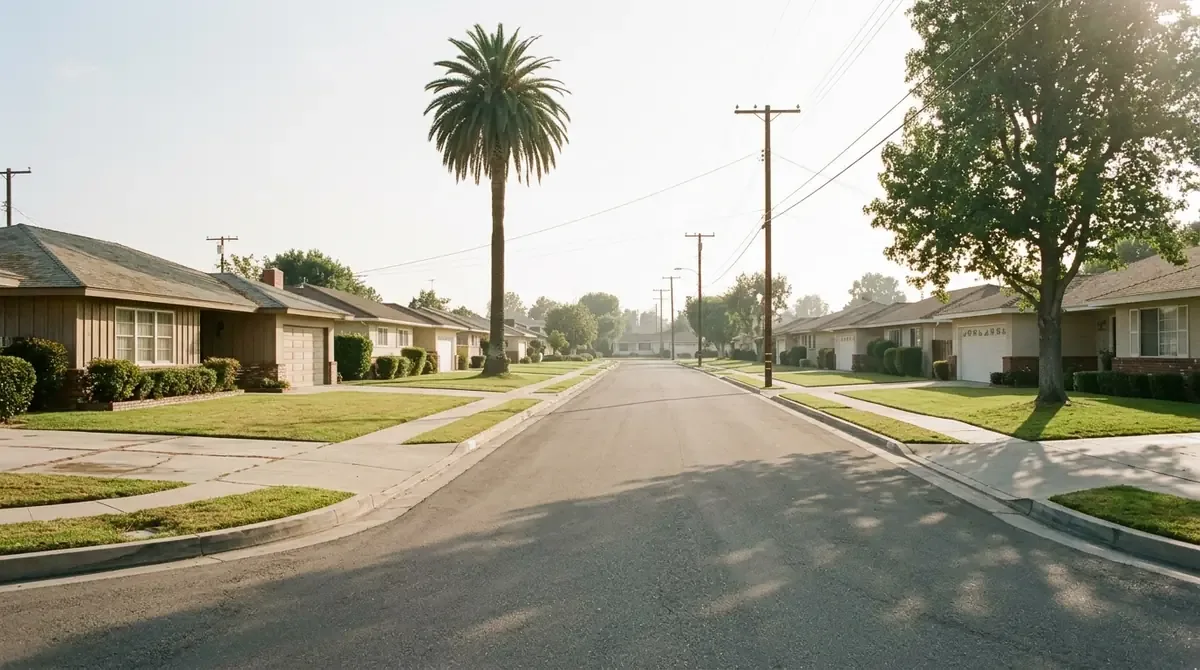
Along Long Beach's border with the city of Lakewood, California, Lakewood Village is a small residential neighborhood, not to be confused with Lakewood, Colorado, with homes in the mid-century tract pattern.
Border-pocket tract homes price like other tract homes. Single-fixture clearing is typically $170 to $350 and a main line $400 to $800, but on original pipe a camera inspection at $175 to $450 first can save paying for repeat clearings.
- Whether the line was ever updated
- Original mid-century pipe, seen on camera
- Cleanout position on the tract lot
- Whether the blockage is a one-off or repeating
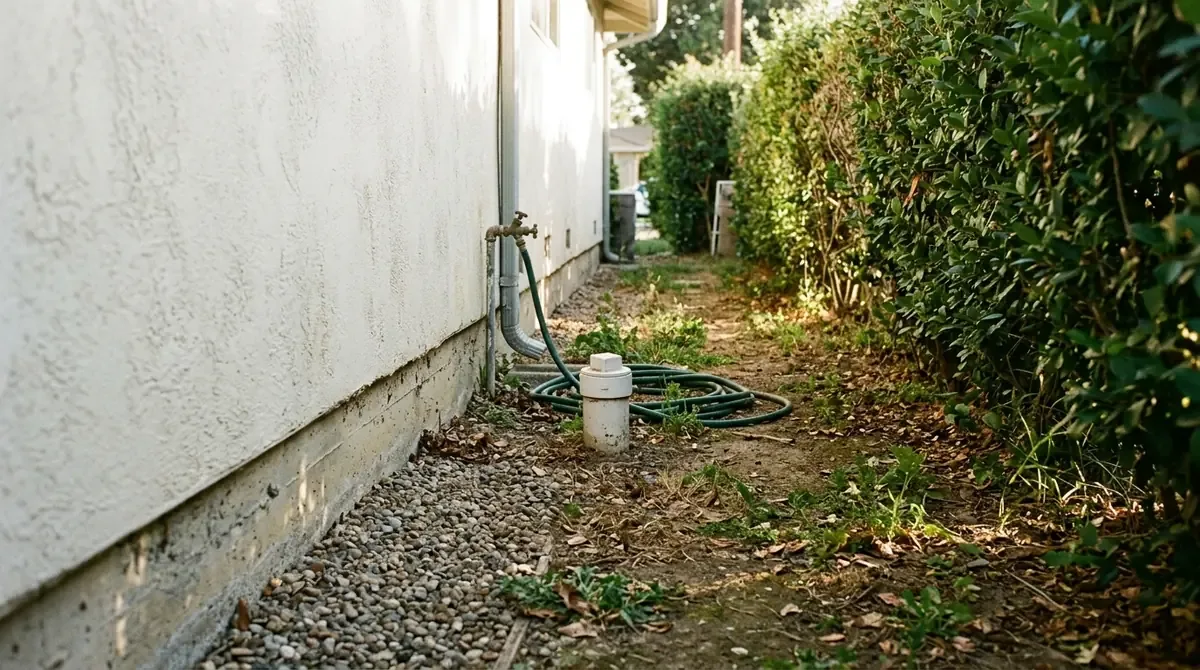
Pipe in Lakewood VillageSide yard of a mid-century slab-on-grade home with a white cleanout pipe
Toilet Clog Removal in Lakewood Village, as it runs
Border-neighborhood tract plumbing.
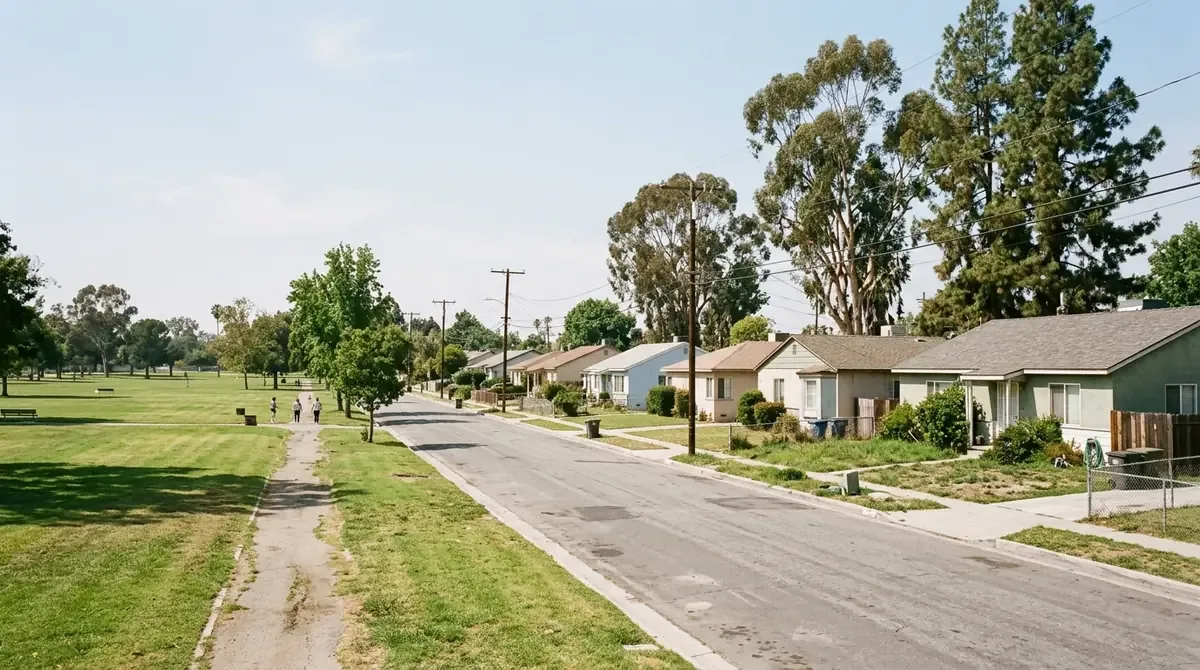
Toilet, Lakewood VillageSuburban homes bordering a large park with tall pines near El Dorado Park
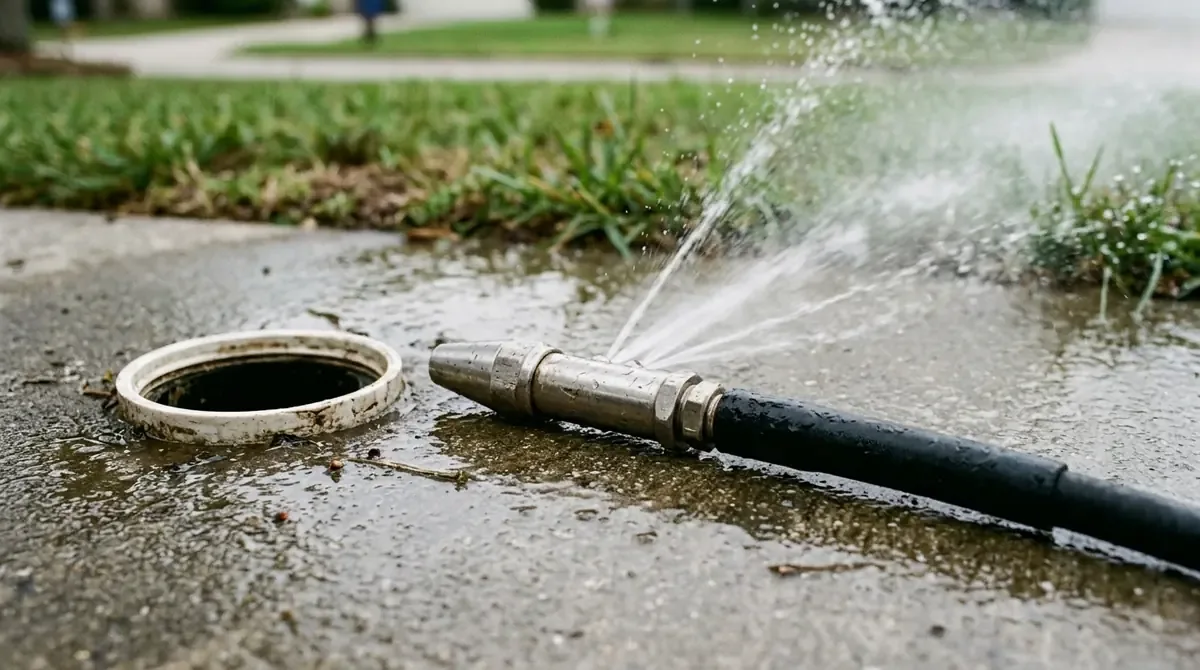
On site in Lakewood VillageHydro jetting nozzle spraying water beside an open cleanout
From first call to finished
We ask which part of town and roughly what year first, because here that changes the answer.
The cheap answers first
If it is one slow fixture, we will tell you what to try before we come out — a plunger with the overflow blocked, or a hand snake past the trap.
Clear it, then say whether it will recur
On an old lateral a clearing is an interval and you are entitled to know roughly how long. On a newer line an object came out and the line is fine.
Tell us the neighborhood and roughly…
It is the single most informative thing you can say about a drain in this city.
The first real rain sorts the sound laterals from the tired ones
Worth knowing, because the busiest week of the year is predictable — and it only affects part of this city.
So if the property is on an older lot, the cheap version of this is a scheduled problem rather than an emergency. A drain that was slow last winter and slow again this spring is telling you what will happen in November, and dealing with it in standard hours in September costs a fraction of dealing with it at nine on a wet Sunday.
- Cheap methods explained before a visit is booked
- No repair decision pushed out of hours, on any pipe
- A camera offered where the age of the line justifies it
Need toilet clog removal in Lakewood Village?
Border-neighborhood tract plumbing.
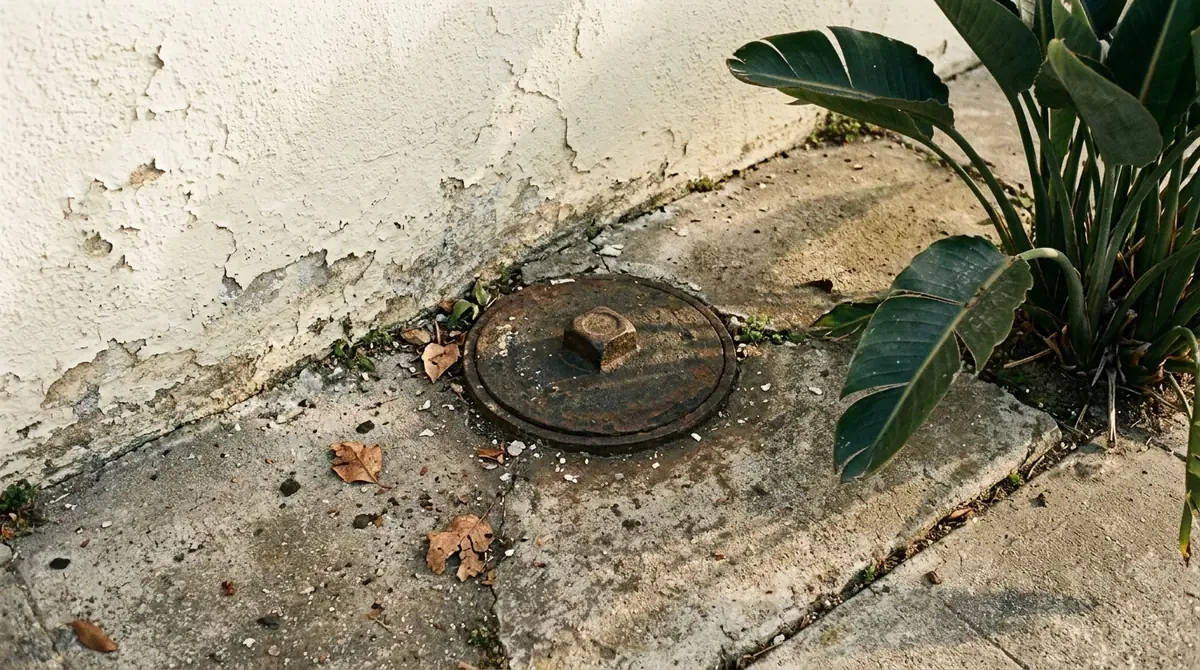
Houses in Lakewood VillageWeathered cast iron cleanout cap set in a concrete strip beside a stucco wall
Toilet Clog Removal in Lakewood Village: straight answers
Still have a question?
Call and ask. You get a straight answer and an estimated range before anybody drives out.
(562) 358-3092How do I know if it is only the toilet or the whole sewer line?
If sinks, tub and floor drains all work normally, it is almost always the toilet's own trapway or short branch and a toilet auger clears it. If the toilet backs up with a tub, shower or floor drain, or gurgles when a sink runs, the line is blocked and needs a camera.
Is drain cleaning necessary?
It depends on the property, not the city. On an early-1900s clay or cast-iron lateral under mature trees it can be the most useful money you spend, because roots and scale return. On a 1960s slab-tract line that has never blocked, a camera inspection is worth more than a cleaning, and on a newer line there may be nothing to remove.
Does the age of my building change what I need?
Yes, more than almost anything else. A 1915 bungalow and a 1962 tract house in the same city usually have different pipe, different joints and different ways of failing. That is why the first questions are the neighborhood and roughly what year the building went up.
Is hydro jetting safe for older pipes?
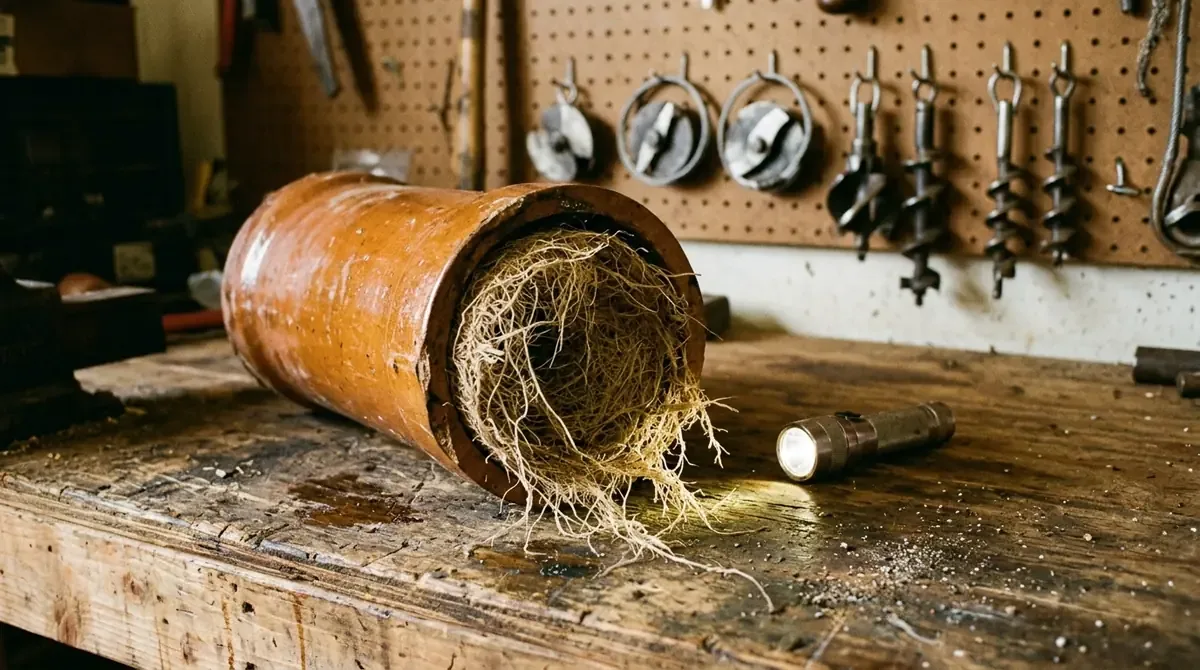
On sound cast iron and modern plastic, yes. On old clay it is both the right tool for roots and the real risk, because a joint that has already opened or a section that has already cracked does not survive full pressure. That is why an older line is seen on camera before it is jetted.
Talk to us about Toilet Clog Removal in Lakewood Village
One call gets a figure and the earliest window we have. No form to fill in first, and no price given at the door.