Kitchen Drain Cleaning in Naples
Kitchen Drain Cleaning in Naples. Kitchen drain work in Long Beach typically runs $150 - $400, and grease, not hair, decides which method fits.

At a glance
- Estimated range
- $150–$400
- How soon
- Same day for most calls
Kitchen Drain Cleaning in Naples: what actually fails
Naples has canal-adjacent lots with little yard between the kitchen and the water, so cleanout access is tight and a backed-up sink gets tested at the cleanout first. Loose laterals taking in groundwater can mimic a grease clog, so we separate the branch from the outside line.
An island neighborhood built around man-made canals, Naples is where Long Beach residents get around by gondola as much as by car, and it is not the Naples in Florida.
Access is what moves the price here. A tight canal-side yard can make reaching the line slower, so a camera inspection, typically $175 to $450, is often the sensible first step before main sewer line clearing at a typical $400 to $800.
- Where the cleanout sits on a canal-adjacent lot
- Whether groundwater is entering through lateral joints
- How equipment reaches the line through a tight yard
- Salt-air corrosion on exposed metal near the line

Pipe in NaplesA narrow sand-spit street of tightly packed beach cottages on the Peninsula
What Kitchen Drain Cleaning in Naples costs
Which means a slow drain in Naples may be groundwater entering the line as much as a blockage inside it, and where the cleanout sits decides how the work goes.
Main Line Drain Cleaning
These are the ranges the trade publishes and homeowners report. Yours is a written quote once the job has been seen.
Kitchen Drain Cleaning in Naples, as it runs
Canal-side lots. Where the cleanout sits matters.

Kitchen, NaplesAn older beach cottage on a small lot in Belmont Shore
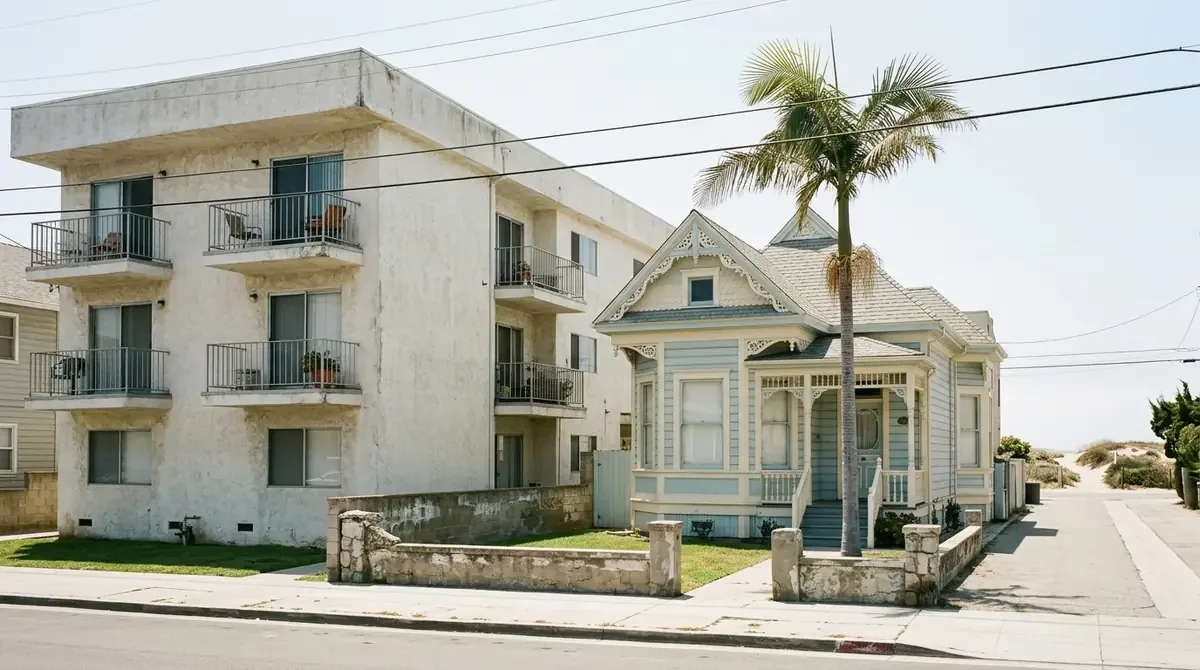
On site in NaplesA stucco apartment building beside a restored Victorian cottage near Alamitos Beach
From first call to finished
We ask which part of town and roughly what year first, because here that changes the answer.
Tell us the neighborhood and roughly…
It is the single most informative thing you can say about a drain in this city.
Then what the other fixtures are doing
Which fixtures, and whether anything is backing up at the lowest point in the building. That settles branch or main in about thirty seconds.
The cheap answers first
If it is one slow fixture, we will tell you what to try before we come out — a plunger with the overflow blocked, or a hand snake past the trap.
Need kitchen drain cleaning in Naples?
Canal-side lots. Where the cleanout sits matters.
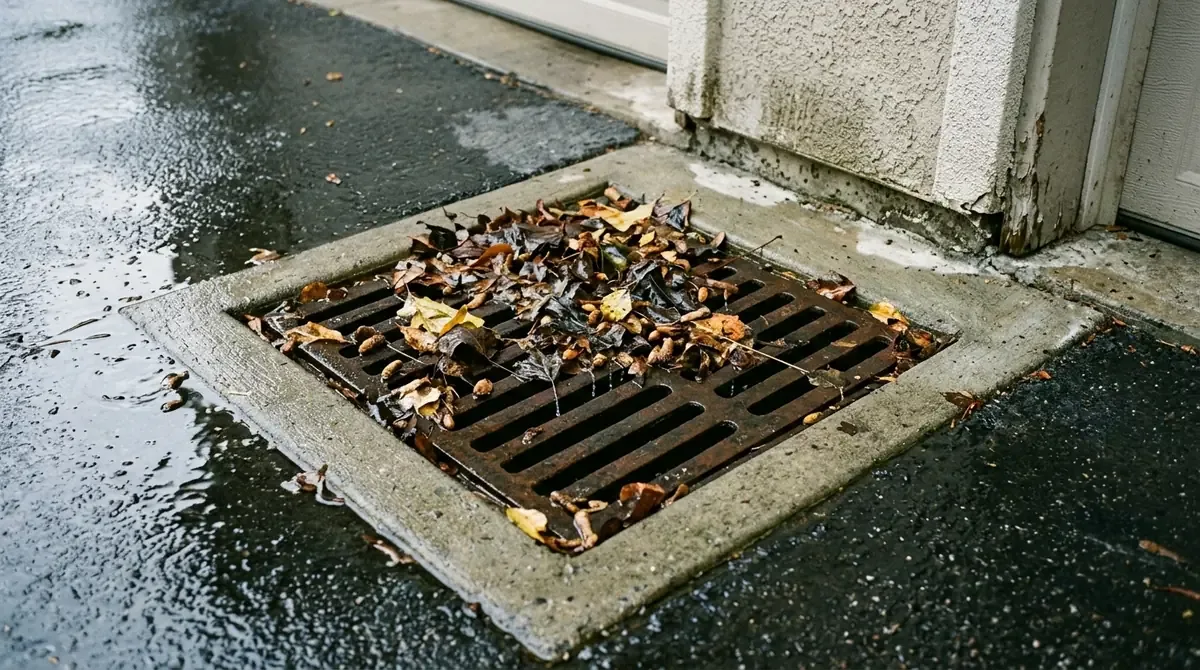
Houses in NaplesConcrete catch basin with an iron grate full of leaves after rain
Kitchen Drain Cleaning in Naples: straight answers
Still have a question?
Call and ask. You get a straight answer and an estimated range before anybody drives out.
(562) 358-3092Can a drain snake be run through a garbage disposal?
No, a standard cable pushed through a disposal can catch on its blades or housing and damage it. If the disposal runs but the sink will not drain, the clog is nearly always further down, so the cable is fed in past the trap arm and the unit is left alone.
Who is responsible for the sewer line, me or the city?
Generally the property owner is responsible for the lateral from the building to its connection with the city main, and the city looks after the main in the street. If you are unsure where the line changes hands, the city can confirm it for your address.
Is drain cleaning necessary?
It depends on the property, not the city. On an early-1900s clay or cast-iron lateral under mature trees it can be the most useful money you spend, because roots and scale return. On a 1960s slab-tract line that has never blocked, a camera inspection is worth more than a cleaning, and on a newer line there may be nothing to remove.
How do I find out what my drain pipe is made of?
Start with the age of the building and the look of the cleanout, the capped pipe at or near ground level outside. Clay, cast iron, ABS and PVC look and feel quite different. If that leaves it unclear, one camera run settles it and the answer stays true for as long as you own the property.
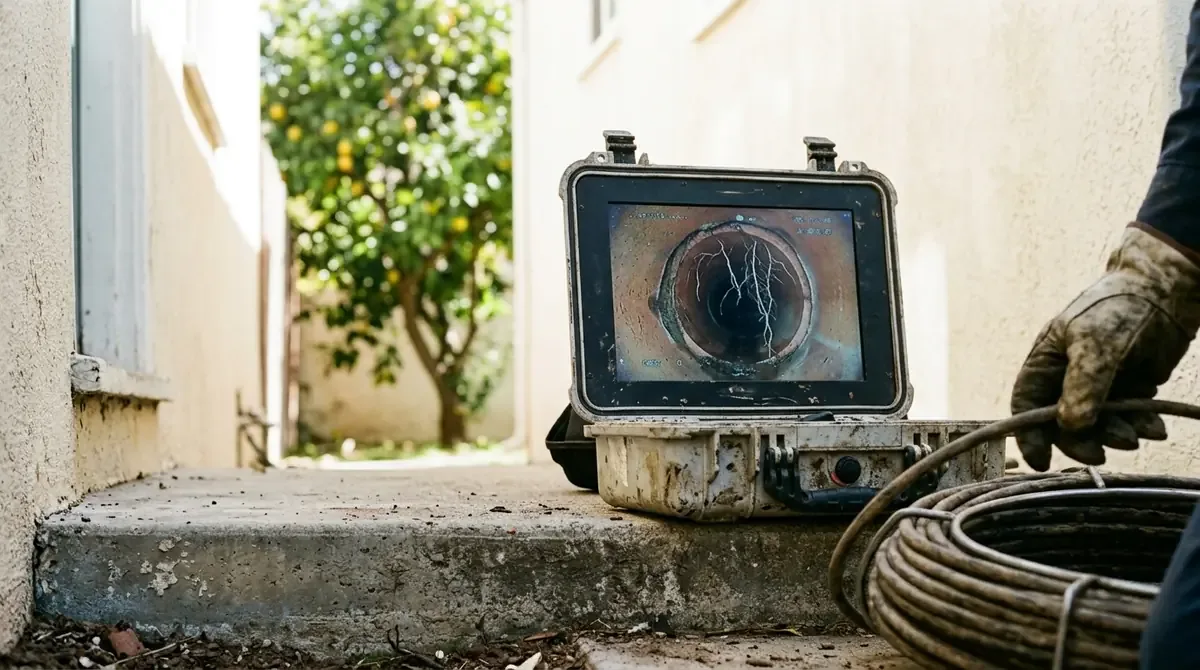
Kitchen Drain Cleaning in Naples, from the first call
Say what you are seeing. Most of it is narrowed down on the phone before anybody sets off.