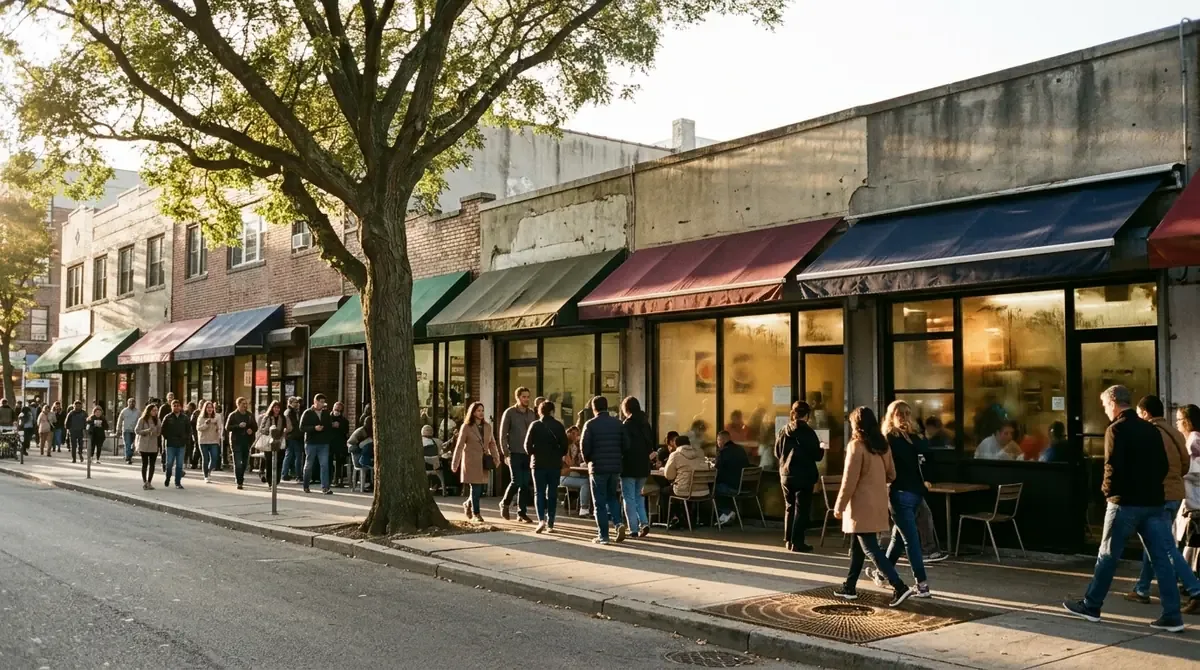
Cambodia Town is an officially designated cultural district along Anaheim Street in Long Beach — home to the largest Cambodian community in the United States outside Cambodia itself.
Cambodia Town is built on dense older residential and mixed-use buildings — a real factor in how quickly drains clog and what it takes to clear them for good. Plumbing that was fine for decades starts showing its age here in specific, predictable ways, and knowing the pattern is what separates a fix that lasts from one that doesn't.
Drain Guys services Cambodia Town as part of our coverage across all of Long Beach, CA — same trucks, same equipment, same same-day availability as every other neighborhood we work in.
Kitchen managers and facilities staff usually notice a grease trap problem before anyone reads a compliance report. Here's what the warning signs typically mean and what we do about each one:
| Symptom | Likely Cause | What We Do |
|---|---|---|
| Kitchen sinks or floor drains draining slowly near the trap | Grease and solids have built up past the trap's effective capacity | Full pump-out and interior cleaning of the trap or interceptor |
| Sewage or rancid odor near the grease trap or dish pit | Trapped FOG (fats, oils, grease) breaking down and off-gassing, or a failing seal | Pump-out, odor source inspection, and lid/seal check |
| Overflow or backup at the trap or connected floor drains | Trap at or beyond capacity — grease and solids have nowhere left to go | Emergency pump-out and line clearing to restore flow immediately |
| Failed or flagged health department inspection | No documented pumping schedule or FOG discharge exceeding permitted limits | Pump-out, service documentation, and a maintenance schedule that satisfies inspectors |
| Flies, roaches, or other pest activity near the trap enclosure | Grease residue and organic buildup attracting pests to the enclosure | Deep cleaning of the trap interior and surrounding enclosure, not just a partial pump |
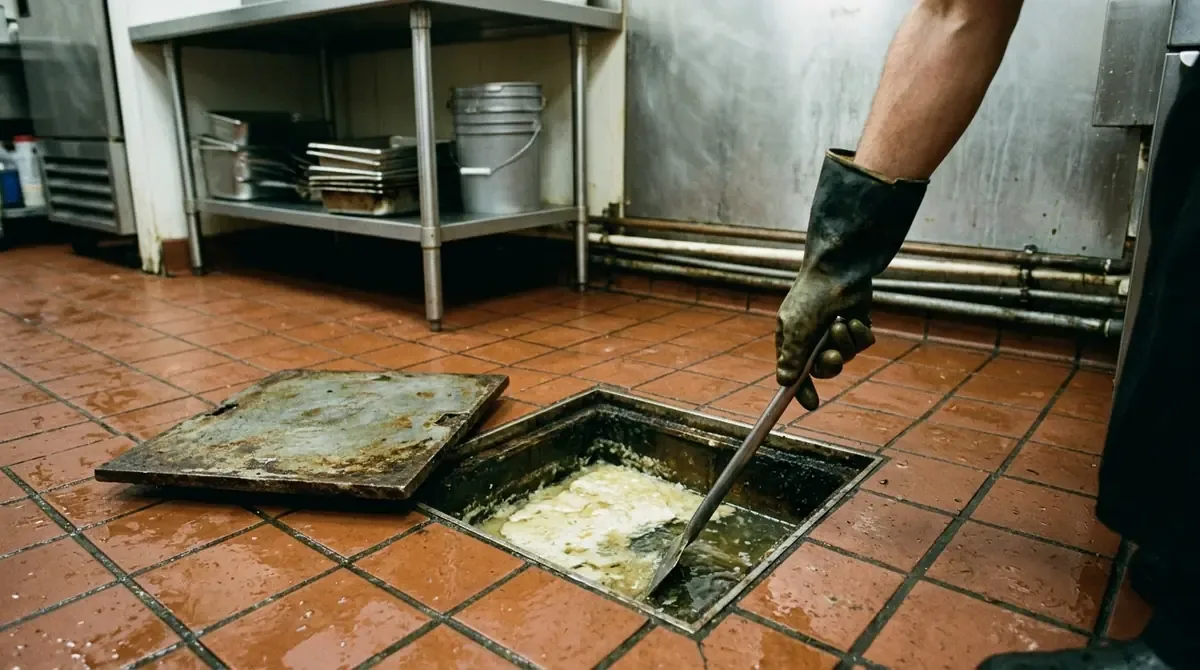
A grease trap (or, for larger kitchens, a grease interceptor) is a plumbing fixture installed between your kitchen drains and the sewer line. Wastewater from sinks, dishwashers, and floor drains flows into the trap, where it cools and separates: fats, oils, and grease (FOG) rise to the top, solids settle to the bottom, and the relatively clean water in the middle layer continues on to the municipal sewer system. It's a simple gravity-separation design, but it only works as long as there's room left inside the trap for that separation to happen. Every service — every fryer basket rinsed, every pan scrubbed, every plate scraped into a floor drain — adds a little more FOG and food solids to the trap. Left unaddressed, that layer of grease and solids grows until it takes up most of the trap's volume, and at that point wastewater passes through with little to no separation at all. That's when grease starts reaching the sewer lateral, where it cools, hardens, and narrows the pipe — the leading cause of sewer line blockages tied to commercial kitchens. Regular pumping isn't a nice-to-have; it's the only thing keeping the trap doing the job it was installed to do.
We arrive with vacuum trucks or portable pumping equipment sized to your trap, whether it's a small under-sink interceptor or a large in-ground unit serving a full commercial kitchen. First, we pump out the trap completely — liquid, grease cap, and settled solids — rather than skimming just the surface layer, which is a shortcut some services use to save time but leaves the trap effectively still full. With the trap empty, we clean the interior walls, baffles, and outlet tee by hand or with high-pressure water jetting, since dried grease clings to these surfaces and reduces separation efficiency even in a trap that's been pumped. We inspect the baffles and internal fittings for damage or wear, check the lid and seal for a proper fit, and confirm the trap is flowing correctly before we leave. Every visit includes a service manifest documenting the date, volume removed, and disposal method — the same documentation your health inspector or the Long Beach Water Department may ask to see. FOG waste is hauled and disposed of through licensed channels, never discharged back into the storm or sewer system.
Restaurants and other food service establishments (FSEs) in Long Beach operate under Fats, Oils, and Grease (FOG) discharge requirements enforced through the city's sewer use regulations. The core rule most FSEs need to know: wastewater leaving your grease trap should not exceed roughly 25% FOG and solids content by volume — once accumulated grease and solids approach that threshold, the trap is no longer separating effectively and is considered due for service. This isn't just a technicality. FOG discharge violations are a documented driver of sanitary sewer overflows (SSOs), and municipalities — Long Beach included — hold commercial kitchens accountable for preventable blockages traced back to inadequate grease management. For an FSE, non-compliance carries real consequences: failed health inspections, fines, forced closure until the issue is corrected, and liability if a grease-related backup affects neighboring units or public sewer infrastructure. Consistent pumping with documented service records is the most direct way to demonstrate compliance if your establishment is ever inspected or audited, and it's far cheaper than dealing with a violation, an emergency shutdown, or a sewer backup during service hours.
How often your trap needs pumping depends on kitchen volume, menu type, and trap size — but the industry benchmark to plan around is the 25% rule: schedule service before accumulated FOG and solids reach about a quarter of the trap's total volume. For most full-service restaurants with an under-counter or small in-ground trap, that works out to pumping every 30 days. High-volume kitchens — fryers running constantly, high covers per night, limited kitchen prep space — often need a 30-day schedule as a floor, not a ceiling. Lower-volume operations, cafes, or establishments with a larger interceptor may be able to stretch to a 60-day or 90-day cycle without exceeding the threshold, but that should be confirmed by an actual measurement at your first service, not assumed. We measure FOG and solids depth at every visit and use that reading to recommend a schedule specific to your kitchen rather than applying a generic interval that either wastes money on unnecessary visits or leaves you exposed to a mid-cycle backup. Once we've established your baseline, we can set up recurring 30/60/90-day service so your compliance documentation stays current without your staff having to track and schedule it manually.
These are general market ranges for Long Beach commercial grease trap service — your exact cost depends on trap size, accumulation level, and access. Call (844) 213-2779 for a free estimate and to set up a recurring service schedule.
| Service | Typical Range |
|---|---|
| Small/under-counter grease trap pump-out | $180 – $280 |
| Large in-ground grease interceptor pump-out | $350 – $450 |
| Emergency/same-day pump-out (overflow or backup) | $400 – $650 |
| Scheduled maintenance plan (30/60/90-day recurring) | Custom — call for a per-visit quote |
Ranges shown are typical market pricing for reference only, not a quote. Every job gets a free, upfront estimate before we start.
Most full-service restaurant kitchens need pumping every 30 days; lower-volume operations or larger interceptors may stretch to 60 or 90 days. The right interval depends on your kitchen's volume and trap size — we measure FOG and solids depth at your first visit and set a schedule based on the 25% rule rather than guessing.
A grease trap separates fats, oils, and grease from kitchen wastewater before it reaches the sewer line. Without it, FOG cools and hardens inside the pipe, causing blockages and backups — and discharging FOG above permitted limits puts your establishment out of compliance with Long Beach sewer use regulations.
Wastewater flows into the trap and slows down enough for fats and oils to rise to the top while solids sink to the bottom. The relatively clean middle layer continues to the sewer. It only works while there's open capacity inside the trap — once grease and solids fill too much of the volume, separation stops happening and FOG passes through untreated.
A trap that isn't pumped on schedule stops separating grease effectively, which leads to slow drains, backups, odors, pest activity, and FOG discharge above the city's allowed threshold. Regular cleaning protects your kitchen's plumbing, keeps you compliant with health and sewer regulations, and avoids the cost of an emergency shutdown.
Watch for slow-draining kitchen sinks or floor drains, sewage odor near the trap, any overflow or backup, or a health inspection flag related to grease management. If you're on a recurring schedule, service is due when your trap approaches the 25% FOG-and-solids threshold — we track this for you on scheduled accounts.
Typical commercial grease trap pumping in Long Beach runs $180 to $450 depending on trap size and accumulation, with larger interceptors and emergency after-hours calls running higher. Call (844) 213-2779 for a free quote and to discuss setting up recurring scheduled service.
Inspectors look for documented pumping records and evidence the trap is being maintained within FOG discharge limits. Without that documentation, you risk a failed inspection, fines, or a forced correction period before you can reopen. Every Drain Guys service visit includes a manifest documenting the date, volume removed, and disposal method to keep your compliance file current.
Yes — we set up 30, 60, or 90-day recurring pump-out schedules based on your kitchen's actual volume, so your facilities team never has to remember to call. Call (844) 213-2779 to set up a scheduled maintenance plan or to get a same-day pump-out if you're dealing with an active backup.
Same-day service, free estimates, serving Cambodia Town and every Long Beach neighborhood.
Call (844) 213-2779