Drain Camera Inspection in West Long Beach
Drain Camera Inspection in West Long Beach. A live look inside the line, typically $175 - $450, showing what is wrong before anyone cuts, jets or digs.
At a glance
- Estimated range
- $175–$450
- How soon
- Same or next business day
Drain Camera Inspection in West Long Beach: what actually fails
With port-adjacent industrial use a block or two from older homes, pipes here have lived different lives. A camera tells you whether the line serving a house or a small business is scaled, offset, or fine, and it is the right step after any repeated backup.
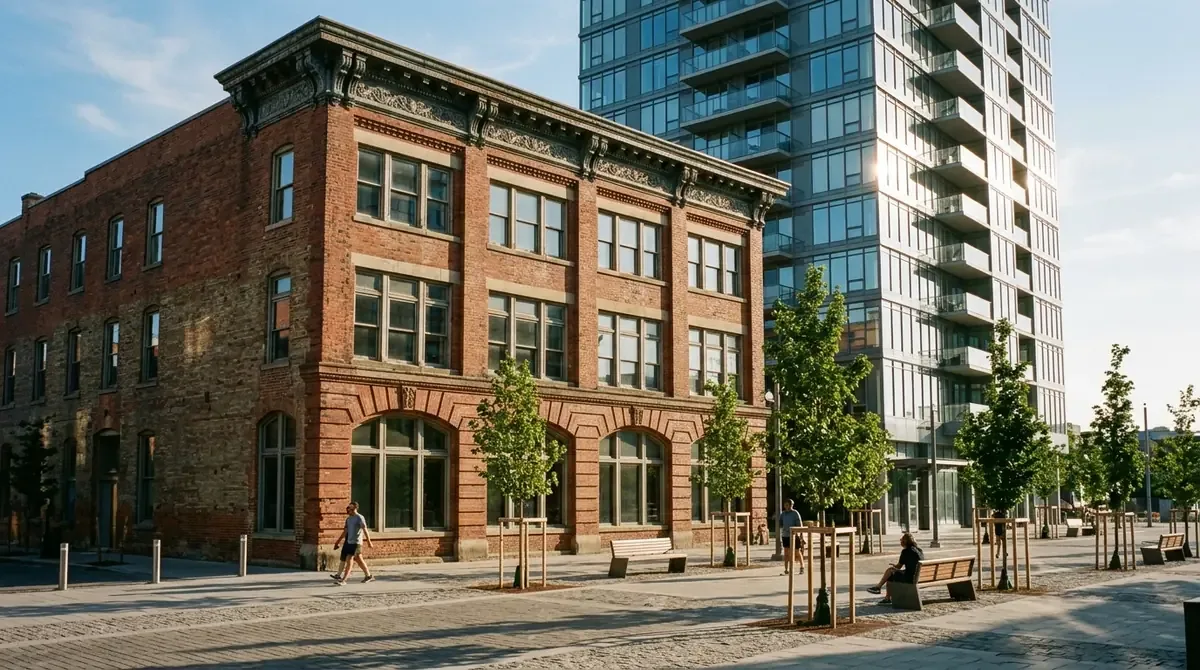
Closest to the Port of Long Beach, West Long Beach has dense working-class residential blocks alongside industrial zoning, so homes and heavy industry share the same side of town.
Dense blocks near industrial use mean the variable is what the line serves. A house fixture is typically $170 to $350, a residential main $400 to $800, and a camera inspection at $175 to $450 separates a neighborhood line from an adjoining property.
- Age of the residential lateral on a dense block
- Whether the house shares its line with next door
- Industrial or commercial drains nearby, told apart
- Cleanout access on a close-packed lot
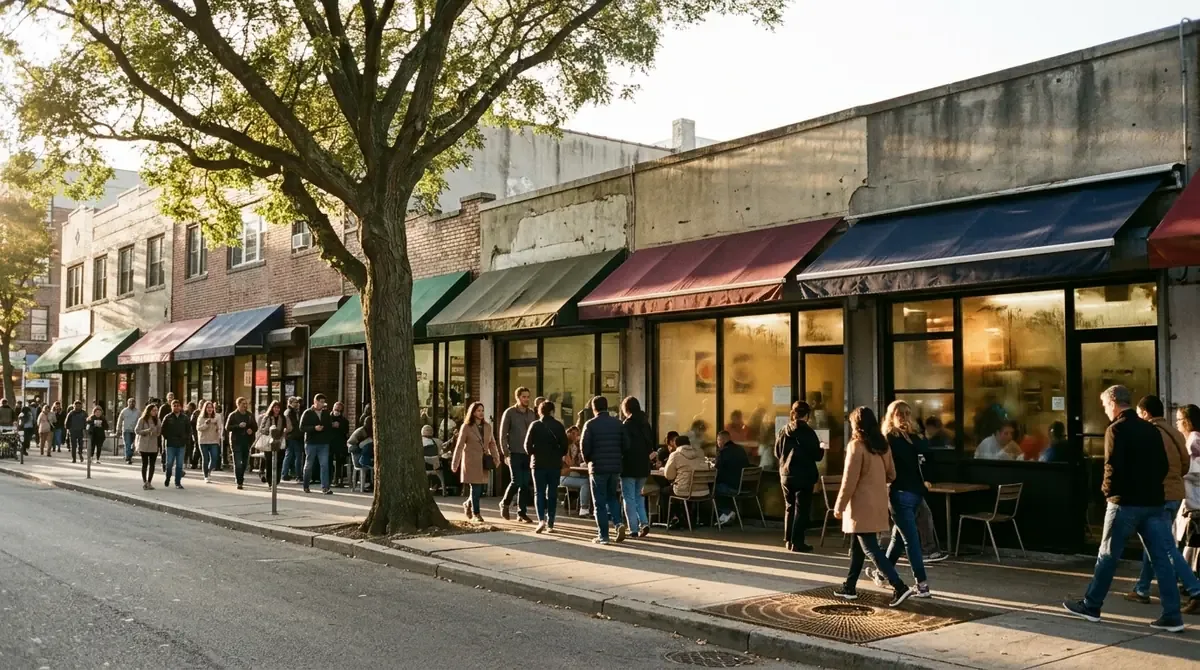
Pipe in West Long BeachA low-rise commercial street of small restaurants along Anaheim Street
What needs a drain tech today in West Long Beach
Call now
- Roughly when was the building put up?The single most informative thing you can say about a drain. A 1915 bungalow and a 1962 slab house can sit a few blocks apart and have almost nothing in common underground.
- Has this drain ever blocked before?A first blockage is an event. A third is a condition. On newer pipe a repeat usually points at habit or an object; on old clay it points at the pipe, and the honest conversation is about the line rather than the clog.
- If those leave it unclear, buy the answer onceOne camera run at a typical $175 to $450 shows what the pipe is made of and what shape it is in, and the answer stays true for as long as you own the property. It is the opposite of a recurring service, and the one thing worth buying before you have a problem.
It can wait for a booking
- Age of the residential lateral on a dense block
- Whether the house shares its line with next door
- Industrial or commercial drains nearby, told apart
- Cleanout access on a close-packed lot
Call us and book a time that suits you. We will still tell you which job it is before anyone drives out.
Call (562) 358-3092Drain Camera Inspection in West Long Beach, as it runs
Dense blocks beside port industry.
Camera, West Long BeachConverted warehouse lofts in the East Village arts district
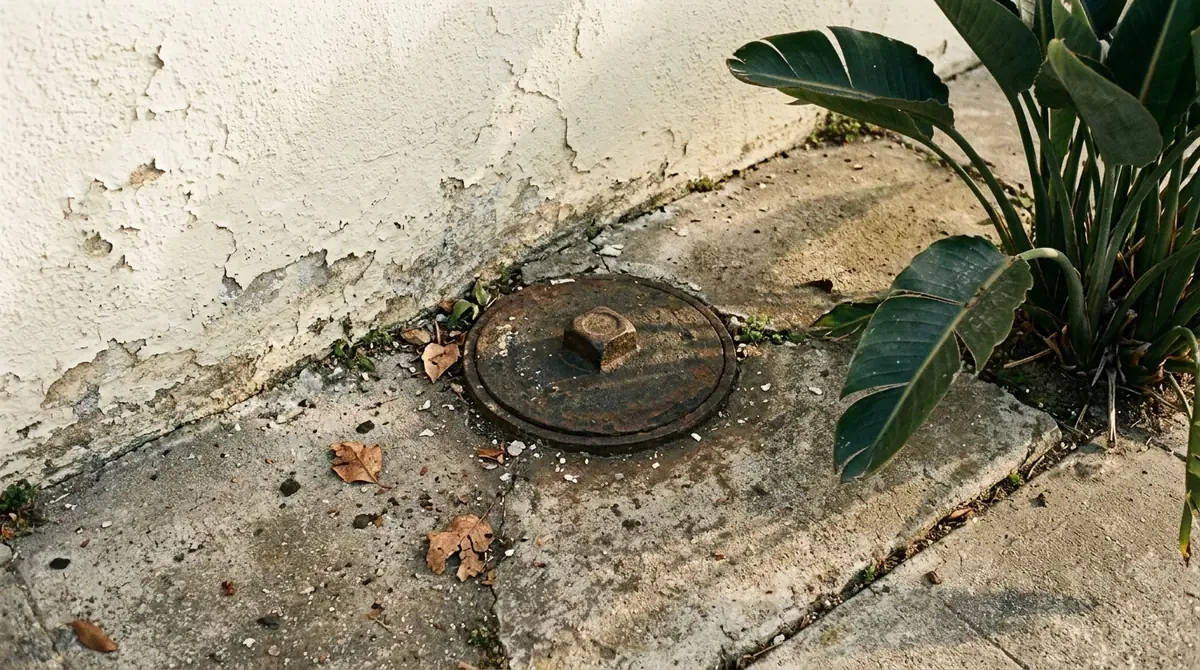
On site in West Long BeachWeathered cast iron cleanout cap set in a concrete strip beside a stucco wall
Five things worth asking, including of us
The first one separates the crews that know this city from the ones quoting a national average.
Did they ask where the property is and…
If a price arrives before those questions do, it is a guess.
What do they think my lateral is made…
Clay, cast iron, ABS or PVC.
Did they establish branch or main…
One blocked fixture and one blocked building are different jobs at different prices. The question takes thirty seconds.
Need drain camera inspection in West Long Beach?
Dense blocks beside port industry.
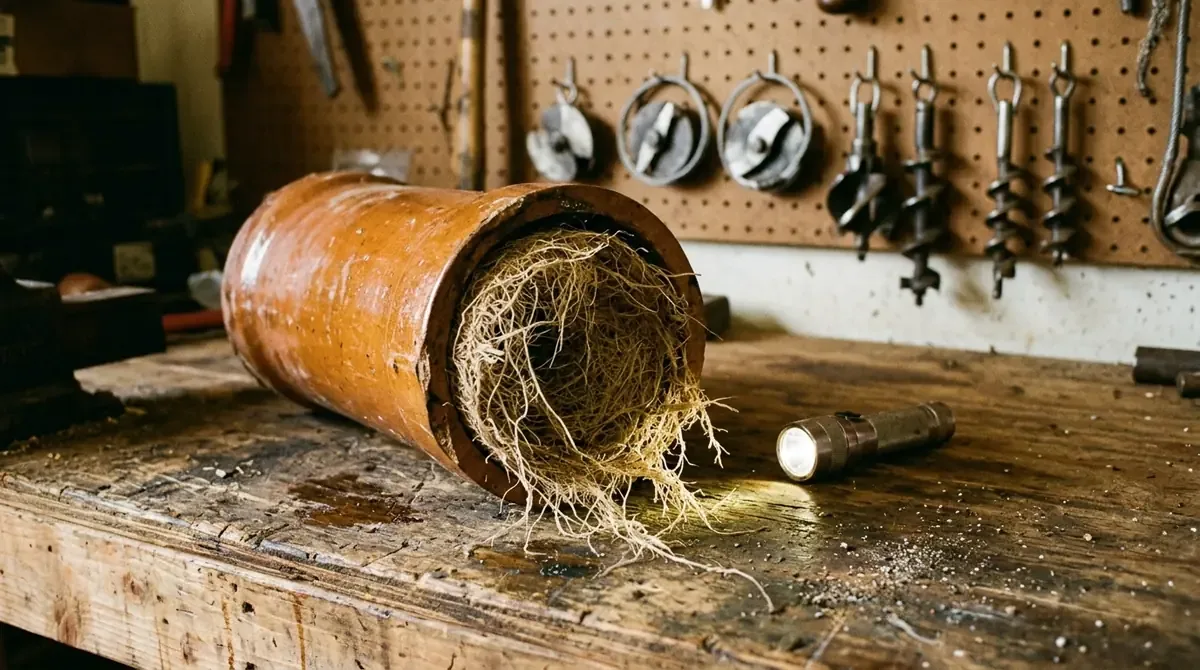
Houses in West Long BeachCut section of old clay sewer pipe packed with fine roots
Drain Camera Inspection in West Long Beach: straight answers
Still have a question?
Call and ask. You get a straight answer and an estimated range before anybody drives out.
(562) 358-3092Will the camera inspection damage my pipes?
No. The camera only observes: it moves through the line recording video and does not cut, scrape or put pressure on the pipe wall. It enters through an existing cleanout or drain opening, so the inspection itself needs no digging and no opening of walls.
Who is responsible for the sewer line, me or the city?
Generally the property owner is responsible for the lateral from the building to its connection with the city main, and the city looks after the main in the street. If you are unsure where the line changes hands, the city can confirm it for your address.
Is drain cleaning necessary?
It depends on the property, not the city. On an early-1900s clay or cast-iron lateral under mature trees it can be the most useful money you spend, because roots and scale return. On a 1960s slab-tract line that has never blocked, a camera inspection is worth more than a cleaning, and on a newer line there may be nothing to remove.
How do I find out what my drain pipe is made of?
Start with the age of the building and the look of the cleanout, the capped pipe at or near ground level outside. Clay, cast iron, ABS and PVC look and feel quite different. If that leaves it unclear, one camera run settles it and the answer stays true for as long as you own the property.
Talk to us about Drain Camera Inspection in West Long Beach
Say what you are seeing. Most of it is narrowed down on the phone before anybody sets off.